Appeals court temporarily blocks judge's ruling to return control of National Guard to California
The court said it would hold a hearing on the matter on Tuesday. The ruling came only hours after a federal judge’s order was to take effect at noon Friday.
More Stories


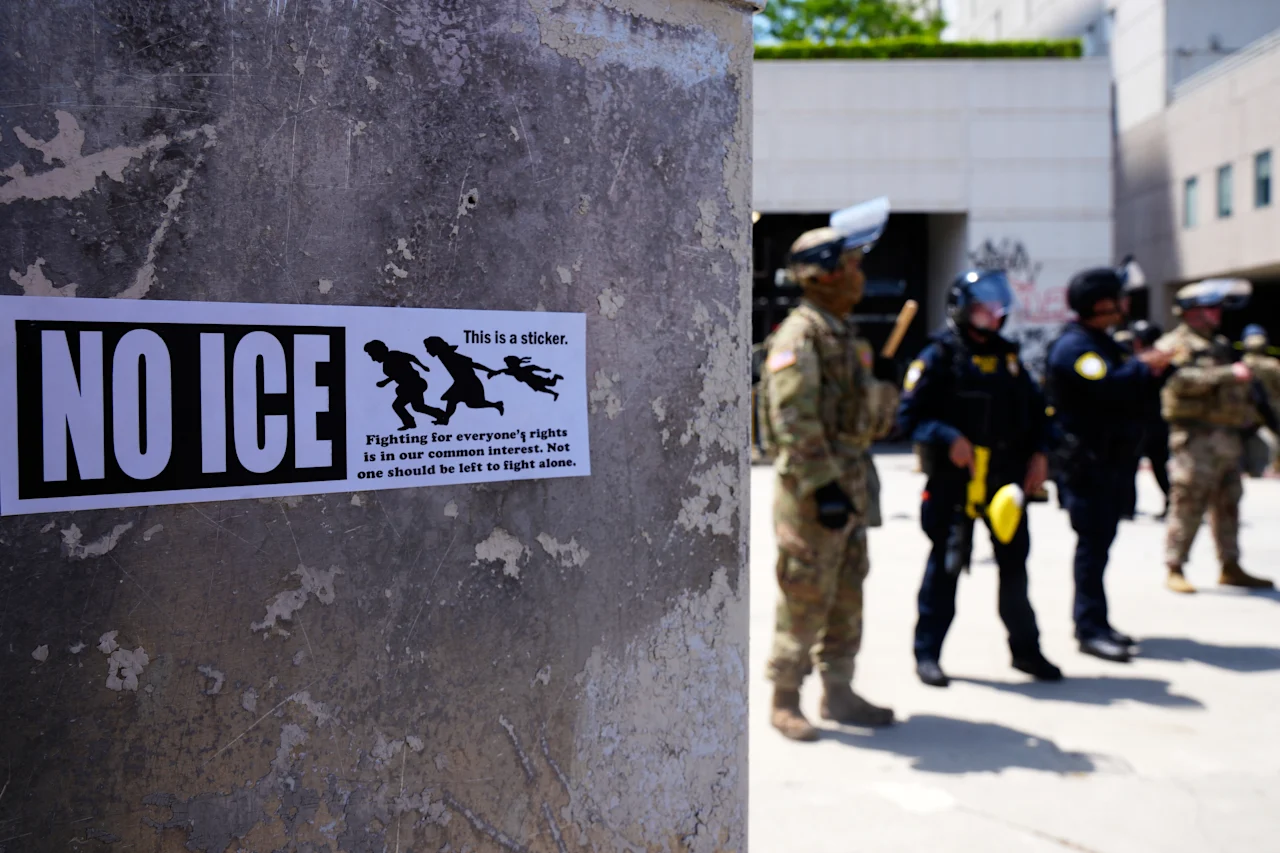
The 9th U.S. Circuit Court of Appeals on Thursday temporarily blocked a federal judge’s order that directed President Donald Trump to return control of National Guard troops to California after he deployed them there following protests in Los Angeles over immigration raids.
The court said it would hold a hearing on the matter on Tuesday. The ruling came only hours after a federal judge’s order was to take effect at noon Friday.
Earlier Thursday, U.S. District Judge Charles Breyer ruled the Guard deployment was illegal and both violated the Tenth Amendment and exceeded Trump’s statutory authority. The order applied only to the National Guard troops and not Marines who were also deployed to the LA protests. The judge said he would not rule on the Marines because they were not out on the streets yet.
California Gov. Gavin Newsom, who had asked the judge for an emergency stop to troops helping carry out immigration raids, had praised the earlier ruling.
“Today was really about a test of democracy, and today we passed the test,” Newsom said in a news conference before the appeals court decision.
The White House had called Breyer's order “unprecedented” and said it “puts our brave federal officials in danger.”
“The district court has no authority to usurp the President’s authority as Commander in Chief,” White House spokesperson Anna Kelly said in a statement. "The President exercised his lawful authority to mobilize the National Guard to protect federal buildings and personnel in Gavin Newsom’s lawless Los Angeles. The Trump Administration will immediately appeal this abuse of power and looks forward to ultimate victory on the issue.”
Marines in civil disturbance training at nearby base
About 700 Marines have been undergoing civil disturbance training at Naval Weapons Station Seal Beach in Orange County, California. Nicholas Green, an attorney for the state, told the court: “I have been told by the office of the governor that within the next 24 hours, 140 Marines will replace and relieve National Guard members in Los Angeles.”
Typically the authority to call up the National Guard lies with governors, but there are limited circumstances under which the president can deploy those troops. Trump federalized members of the California National Guard under an authority known as Title 10.
Title 10 allows the president to call the National Guard into federal service under certain limited circumstances, such as when the country “is invaded,” when “there is a rebellion or danger of a rebellion against the authority of the Government,” or when the president is unable “to execute the laws of the United States.”
Breyer said in his ruling that what is happening in Los Angeles does not meet the definition of a rebellion.
“The protests in Los Angeles fall far short of ‘rebellion,’” he wrote.
California sued the federal government
Newsom sued to block the Guard’s deployment against his wishes. California later filed an emergency motion asking the judge to block the Guard from assisting with immigration raids.
The governor argued that the troops were originally deployed to protect federal buildings and wanted the court to block the troops from helping protect immigration agents during the raids, saying that involving the Guard would only escalate tensions and promote civil unrest.
Maj. Gen. Scott Sherman, commander of Task Force 51, which is overseeing the Guard troops and Marines sent to Los Angeles, said that as of Wednesday about 500 of the Guard troops had been trained to accompany agents on immigration operations. Photos of Guard soldiers providing security for the agents have already been circulated by immigration officials.
None of the Marines have been trained to go on immigration raids, and it is not yet clear if they eventually will, Sherman said.
Trump improperly called up the Guard, judge says
In his broad ruling, the judge determined Trump had not properly called the Guard up in the first place.
The lawsuit argued that Title 10 also requires that the president go through governors when issuing orders to the National Guard.
Brett Shumate, an attorney for the federal government, said Trump complied with the statute by informing the general in charge of the troops of his decision and would have the authority to call in the Guard even if he had not.
In a brief filed ahead of the Thursday hearing, the Justice Department said Trump’s orders were not subject to judicial review.
“Courts did not interfere when President Eisenhower deployed the military to protect school desegregation. Courts did not interfere when President Nixon deployed the military to deliver the mail in the midst of a postal strike. And courts should not interfere here either,” the department said.
“Our position is this is not subject to judicial review,” Shumate told the judge.
Breyer, who at one point waved a copy of the Constitution, said he disagreed.
“We’re talking about the president exercising his authority, and the president is of course limited in that authority. That’s the difference between a constitutional government and King George,” he said.
Protests intensified
The protests over immigration raids in Los Angeles intensified after Trump called up the Guard and have since spread to other cities, including Boston, Chicago and Seattle.
Trump has described Los Angeles in dire terms that Mayor Karen Bass and Newsom say are nowhere close to the truth.